
About This Park
Bukornine National Park is about twenty kilometers from Tunis, covering almost 2,000 ha, located in the vicinity of Hammam-Lif. The humid climate has allowed the development of a sublime forest as well as many plant species: junipers, cyclamen, tulips, rosemary.
In addition, Boukornine is home to 25 species of mammals: wild boar, jackal, wild cat, porcupine, birds of prey, several species of sedentary and migratory birds, chameleons, ocellated lizard, tortoise, snake horseshoe, etc.
The park is characterized by its thick plant adornment, rich and diversified. There are different varieties of trees: eucalyptus, rosemary…
The park is considered to be the only site in North Africa to house “Meriem’s Persian incense”, the cyclamen, a plant variety that mainly likes the eastern Mediterranean basin.
At the park, one can find flowers like the Persian cyclamen and animals like the Etruscan shrew (the smallest known mammal in the world) and the mountain gazelle.
The park is the site of Jebel Boukornine (a 576 meter mountain) and the Aïn Zargua spring, as well as an ecomuseum.
There is also a rare variety found only in North Africa. The snout mouse is also one of the specialties of the park.
The flora of Boukornine National Park is also very varied. There are more than 200 species of plants.
Bukornine National Park in Photos
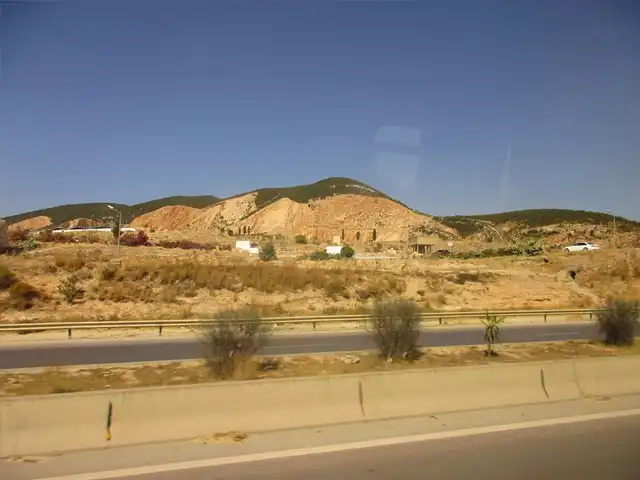


Where to Find Bukornine National Park
Discover in Video
Frequently Asked Questions
Bukornine (Boukornine) National Park near Hammam-Lif is the only site in North Africa where Persian cyclamen (Cyclamen persicum) grows wild. It also supports the Etruscan shrew, one of the world's smallest mammals, alongside more than 200 plant species in its Mediterranean scrub and woodland habitat.
Bukornine is approximately 20 km from central Tunis, making it the most accessible national park to the capital. The park entrance is near the town of Hammam-Lif, reachable by suburban train from Tunis (TGM to Hammam-Lif station).
Jebel Boukornine ("Two-Horned Mountain") rises to 576 metres, offering panoramic views over the Gulf of Tunis, Carthage, and on clear days, the Cap Bon peninsula. The twin rocky peaks are visible from much of greater Tunis.
The park supports wild boar, crested porcupine, Egyptian mongoose, and various reptiles in its garigue and maquis scrubland. Bird life includes Bonelli's eagle, peregrine falcon, and numerous migrant species using the park as a stopover point.
Yes. Bukornine is an excellent half-day or full-day hiking destination from Tunis. Marked trails lead from the park entrance up to the Aïn Zargua spring and toward the summit. The park is particularly beautiful in spring when wildflowers bloom.
Entry requires a permit at the park entrance. A small fee applies. Hiking alone in the upper park is possible but a local guide adds value, especially for identifying the park's notable plant species.
