
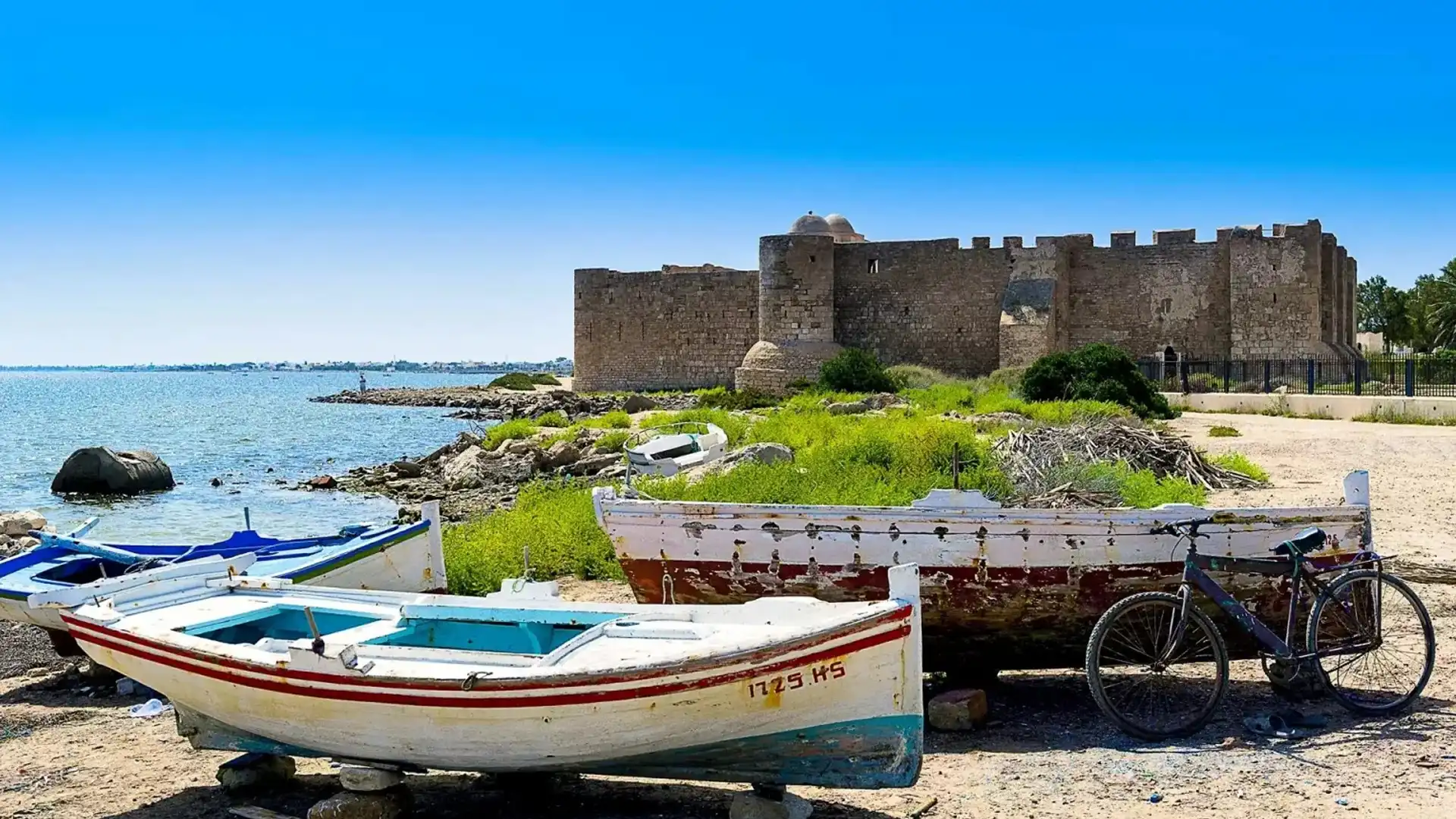
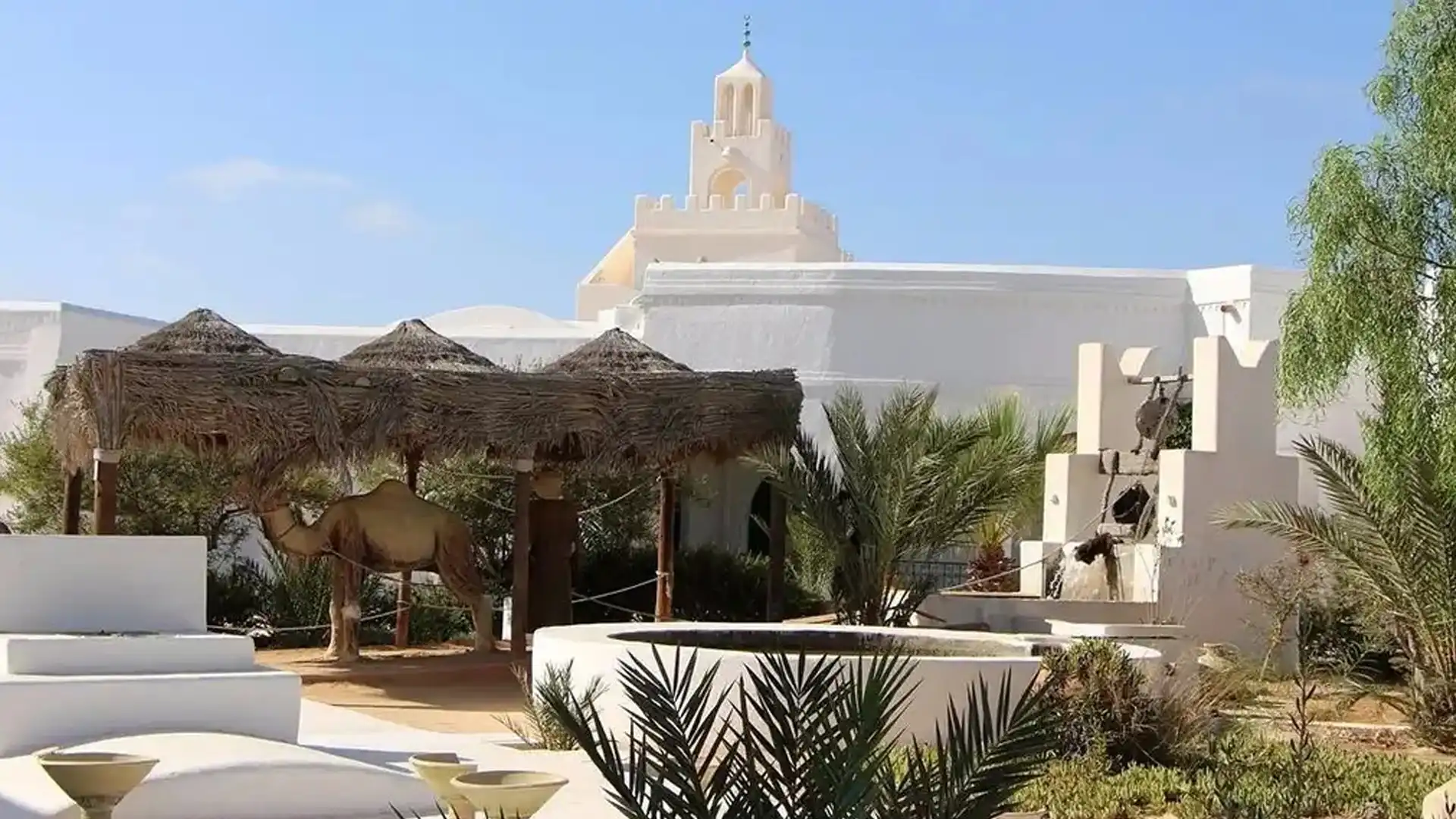
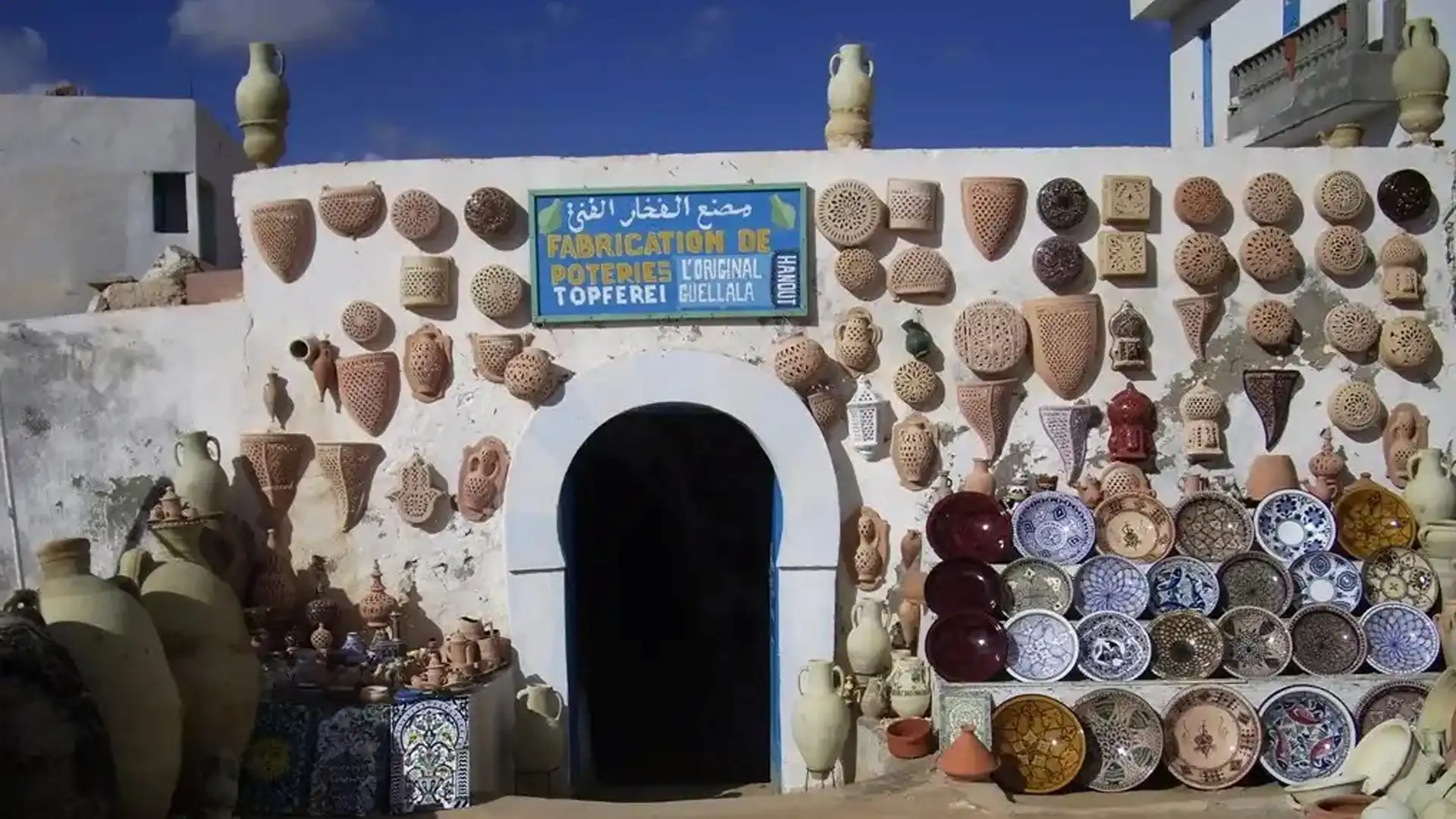
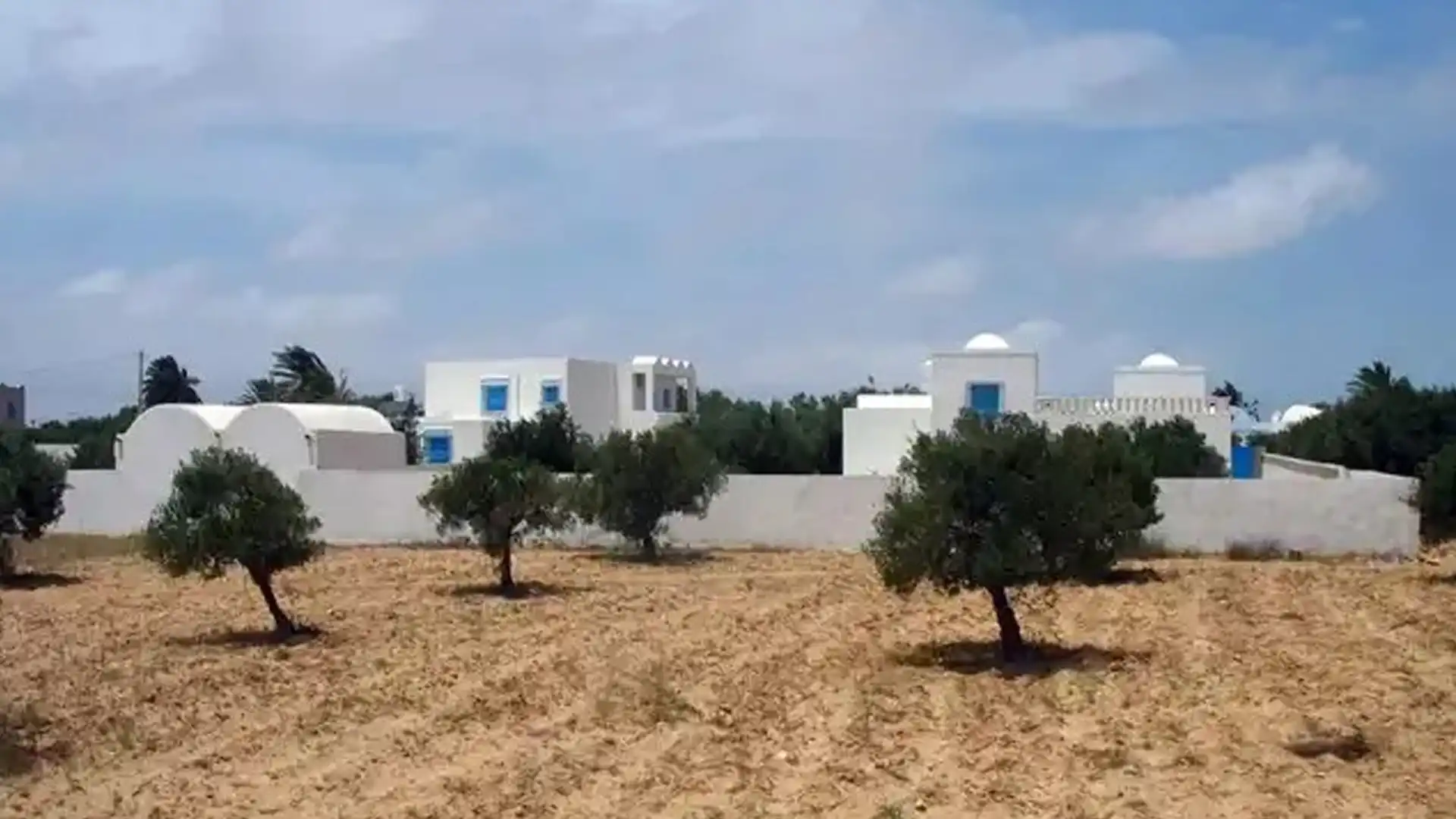
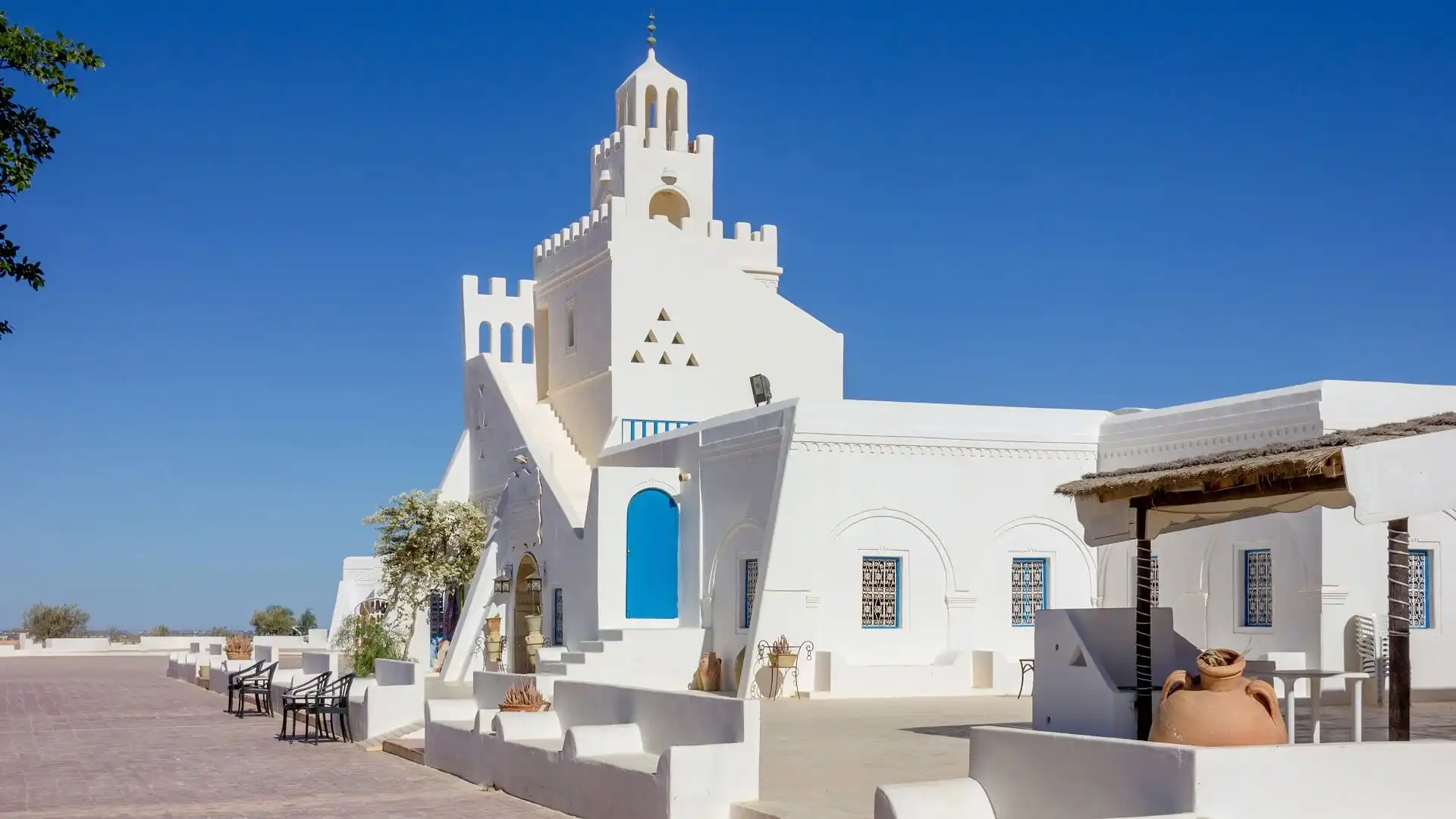
The island of Djerba, also known as Jerba, lies in the Gulf of Gabès (also called the Small Syrte) in southeastern Tunisia. It covers 514 km², measuring 25 kilometers by 20 kilometers. Consequently, it is the largest island in North Africa, with 125 kilometers of coastline. Two connections link the island to the mainland. A ferry ensures the crossing between Ajim and Jorf. Additionally, the kantara, a 7-kilometer route dating from Roman times, connects the southeastern tip of the island to the Zarzis peninsula.
Djerba has 120,000 inhabitants, with nearly 44,000 living in Houmt Souk, the island’s largest city and administrative capital. Its inhabitants are mainly Arabic speakers. However, a large Berber-speaking community also lives there. A small and very old Jewish community, descended from exiles from Jerusalem, also resides on the island. Most of the island is a rural area with villages of Berber origin. These include Mezraya, Ghizen, Tezdaine, Wersighen, Sedouikech, Ajim, and Guellala.
The Island of Djerba : Culture and Heritage
The island offers a unique blend of cultures and traditions. Visitors can explore its rich heritage through various sites and experiences. The ancient El Ghriba synagogue stands as one of the oldest synagogues in the world. The island is also known for its traditional menzels, distinctive Berber dwellings. Djerba’s coastal villages, white sandy beaches, and clear turquoise waters attract tourists year-round. Consequently, the island has become a popular tourist destination. Visitors can enjoy water activities, explore historical landmarks, and experience local craftsmanship. Ultimately, the island of Djerba offers an unforgettable journey into Tunisia’s island heritage.
The Island of Djerba in Video
The Island of Djerba on the Map
Map data © OpenStreetMap contributors
Where to Go in The Island of Djerba
Click on any place to discover it, or visit its full page.

The City of Houmt Souk
Discover →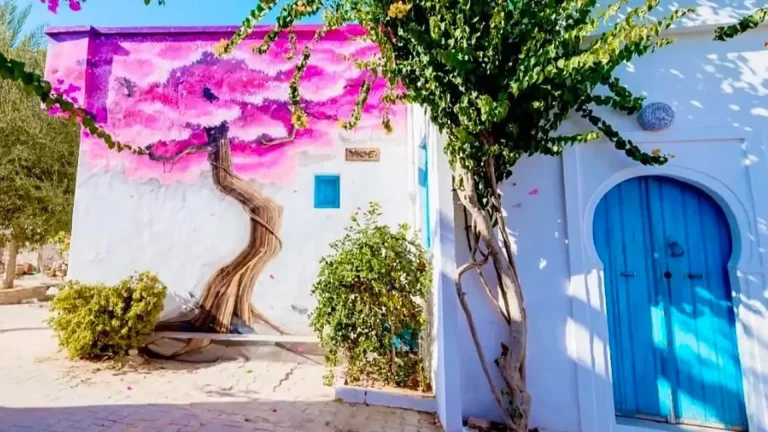
Djerbahood Street Art
Discover →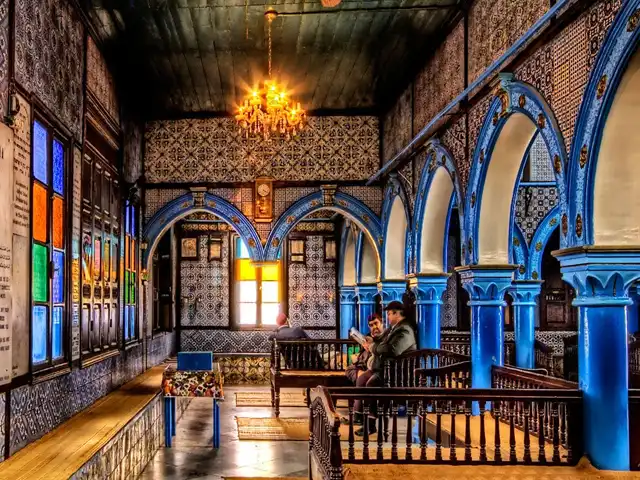
The Ghriba Synagogue
Discover →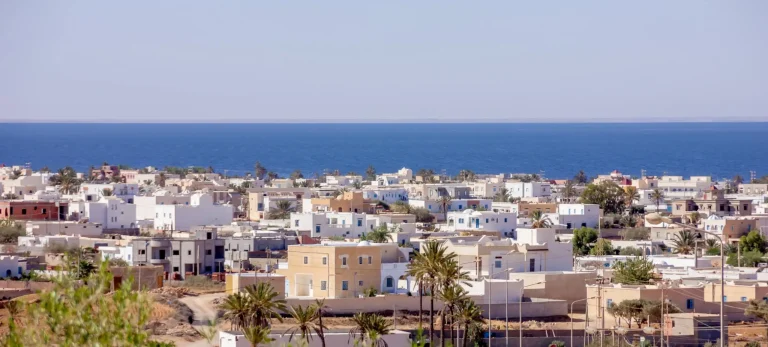
The Village of Guellala
Discover →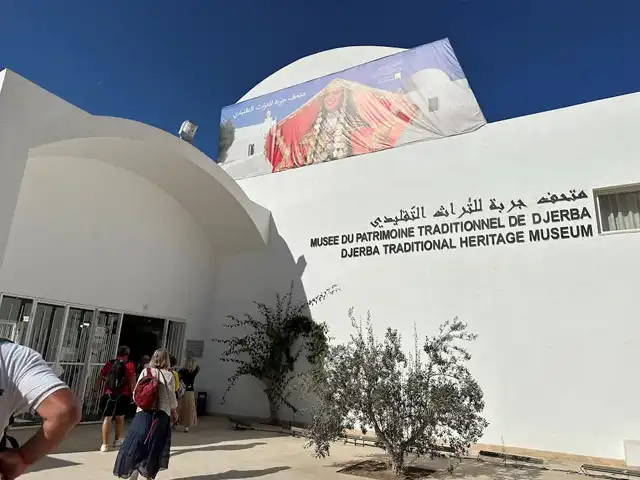
Djerba museum of traditions
Discover →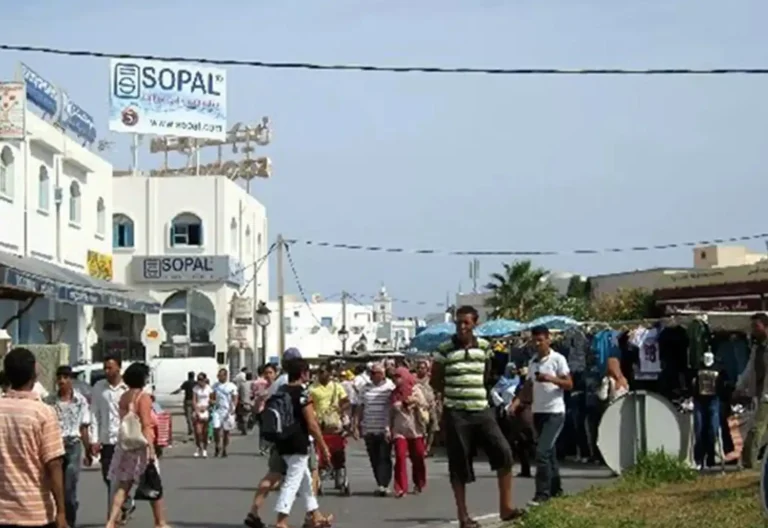
The City of Midoun
Discover →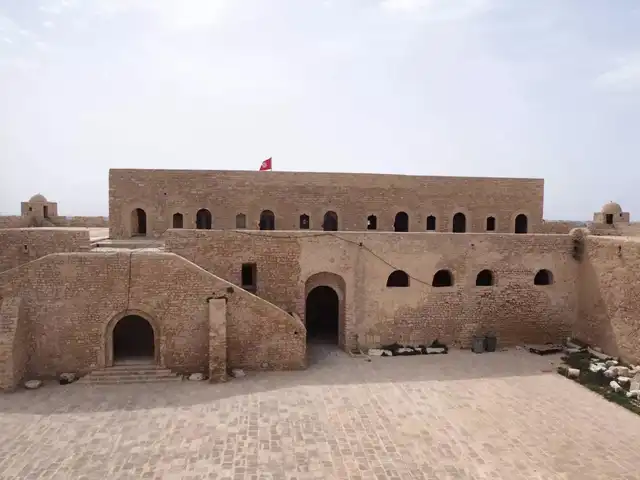
Borj el Kebir The Ottoman Fort
Discover →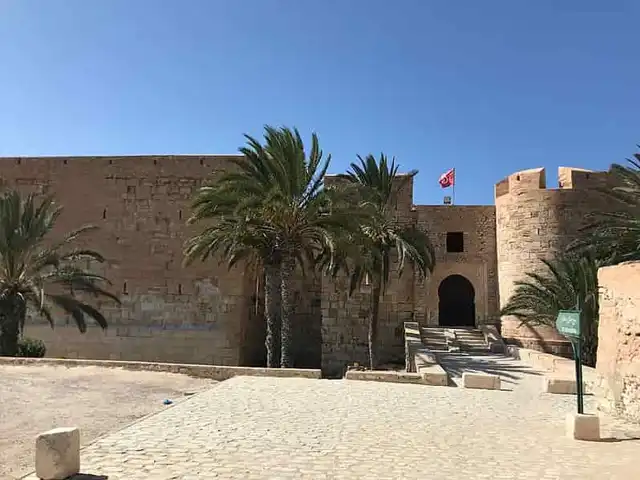
The Spanish Fort Borj Ghazi Mustapha
Discover →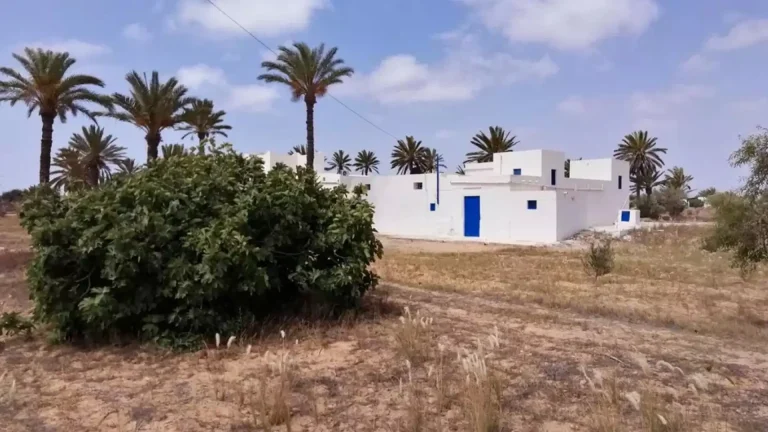
Mahboubine Village
Discover →Frequently Asked Questions
Everything you need to know before visiting The Island of Djerba.
You came for the sun. You'll stay for the soul.
Let us show you what Tunisia truly is
