
About This Park
Der Bukornine-Nationalpark liegt etwa zwanzig Kilometer von Tunis entfernt und umfasst fast 2.000 ha in der Nähe von Hammam-Lif. Das feuchte Klima hat die Entwicklung eines großartigen Waldes sowie vieler Pflanzenarten ermöglicht: Wacholder, Alpenveilchen, Tulpen, Rosmarin.
Darüber hinaus beherbergt Boukornine 25 Säugetierarten: Wildschweine, Schakale, Wildkatzen, Stachelschweine, Raubvögel, mehrere Arten von Stand- und Zugvögeln, Chamäleons, Augeneidechse, Schildkröte, Schlangenhufeisen usw.
Der Park zeichnet sich durch seinen dichten Pflanzenschmuck aus, reich und abwechslungsreich. Es gibt verschiedene Baumarten: Eukalyptus, Rosmarin…
Der Park gilt als der einzige Ort in Nordafrika, an dem “Meriems persischer Weihrauch”, das Alpenveilchen, eine Pflanzenart, die hauptsächlich das östliche Mittelmeerbecken liebt, beheimatet ist.
Im Park findet man Blumen wie das persische Alpenveilchen und Tiere wie die etruskische Spitzmaus (das kleinste bekannte Säugetier der Welt) und die Berggazelle.
Der Park beherbergt den Jebel Boukornine (einen 576 Meter hohen Berg) und die Quelle Aïn Zargua sowie ein Ökomuseum.
Es gibt auch eine seltene Sorte, die nur in Nordafrika vorkommt. Auch die Schnauzenmaus gehört zu den Spezialitäten des Parks.
Auch die Flora des Boukornine-Nationalparks ist sehr vielfältig. Es gibt mehr als 200 Pflanzenarten.
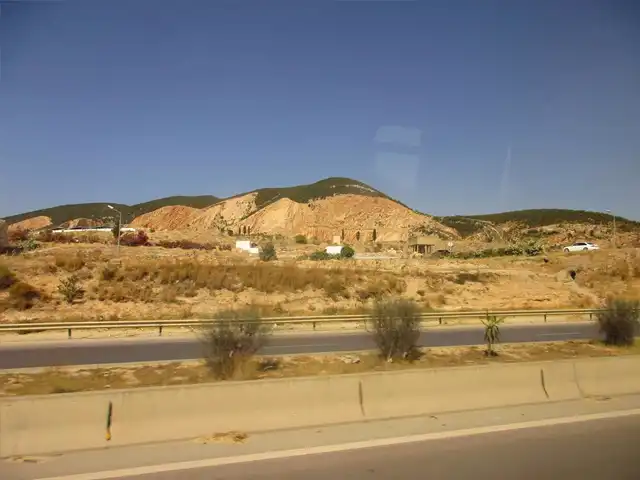
Bukornine-Nationalpark in Photos


Wo findet man Bukornine-Nationalpark
Discover in Video
Häufig gestellte Fragen
Bukornine (Boukornine) National Park near Hammam-Lif is the only site in North Africa where Persian cyclamen (Cyclamen persicum) grows wild. It also supports the Etruscan shrew, one of the world's smallest mammals, alongside more than 200 plant species in its Mediterranean scrub and woodland habitat.
Bukornine is approximately 20 km from central Tunis, making it the most accessible national park to the capital. The park entrance is near the town of Hammam-Lif, reachable by suburban train from Tunis (TGM to Hammam-Lif station).
Jebel Boukornine ("Two-Horned Mountain") rises to 576 metres, offering panoramic views over the Gulf of Tunis, Carthage, and on clear days, the Cap Bon peninsula. The twin rocky peaks are visible from much of greater Tunis.
The park supports wild boar, crested porcupine, Egyptian mongoose, and various reptiles in its garigue and maquis scrubland. Bird life includes Bonelli's eagle, peregrine falcon, and numerous migrant species using the park as a stopover point.
Yes. Bukornine is an excellent half-day or full-day hiking destination from Tunis. Marked trails lead from the park entrance up to the Aïn Zargua spring and toward the summit. The park is particularly beautiful in spring when wildflowers bloom.
Entry requires a permit at the park entrance. A small fee applies. Hiking alone in the upper park is possible but a local guide adds value, especially for identifying the park's notable plant species.

