
Borj el Kebir, the Ottoman Fort of Mahdia
The Ottoman fortress at the tip of the Mahdia peninsula
Discover the place
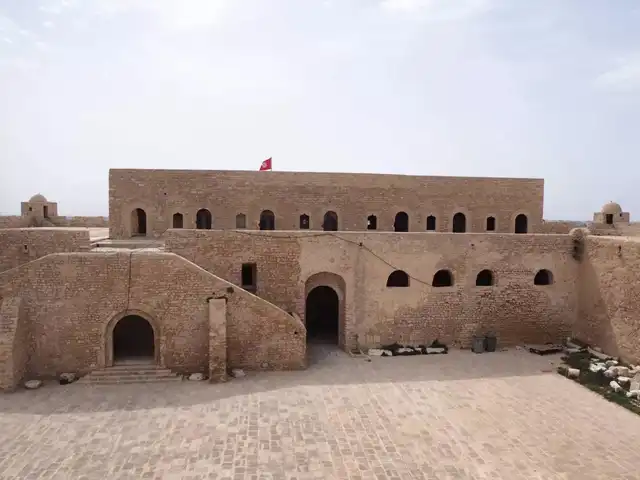
Borj el Kebir in Mahdia, the great fort, stands at the highest point of the peninsula. Built by the Ottomans at the end of the 16th century, it is one of the finest examples of Ottoman military architecture in Tunisia. From its walls, the sea seems to surround you on all sides.
Borj el Kebir in Mahdia: a fortress on a palace
The fort rises on the site of a former Fatimid palace. After the wars of the 16th century between Spain and the Ottoman Empire, the new masters of Mahdia built this square fortress with strong walls. Later, corner bastions were added for cannons. In the 19th century, the building served as a prison for a time.
Inside the fort
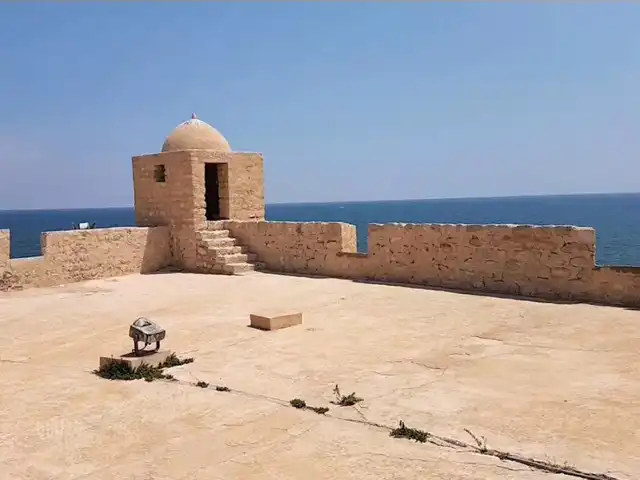
A single gate leads into a bent, vaulted passage, designed to slow down attackers. Then you reach an inner courtyard surrounded by vaulted rooms. In one corner, a small oratory, older than the fort, is still visible. Above all, climb onto the ramparts: the view over the tip of the cape, the lighthouse and the turquoise water is magnificent.
Around the fort
Below the walls, the old Fatimid harbour, cut into the rock, is still visible. Along the shore, the white tombs of the marine cemetery stretch towards the sea, a peaceful and moving sight. Further on, the lighthouse marks the very end of the peninsula. In fact, this whole area is one of the most beautiful walks in Mahdia.
Practical tips for Borj el Kebir in Mahdia
Allow about one hour for the fort and the ramparts. Come in the late afternoon, when the light is soft and the sea turns gold. Then walk back through the medina to the Great Mosque and the Skifa Kahla. In summer, also bring water and a hat. For more on the city, see Mahdia on Wikipedia.
In short, Borj el Kebir offers the best view of Mahdia, between history and the open sea.
Not to be missed
- An Ottoman fortress from the late 16th century Built on the site of a Fatimid palace A bent, vaulted entrance passage Ramparts with views over the sea and the cape Next to the old Fatimid harbour and the marine cemetery
Practical information
- Period
- Late 16th century
- Location
- Tip of the peninsula, Mahdia
In pictures


On video
Where is it?
Frequently asked questions
The great fort of Mahdia, built by the Ottomans in the late 16th century on the site of a Fatimid palace.
A vaulted entrance passage, an inner courtyard, vaulted rooms, a small old oratory and the ramparts.
Yes. From the ramparts, the view over the cape and the sea is magnificent.
About one hour for the fort and the ramparts.
The late afternoon, when the light is soft over the sea.
The old Fatimid harbour, the marine cemetery and the lighthouse.
The Great Mosque, the Skifa Kahla gate and the medina.

Eight UNESCO sites. One extraordinary country.
Discover Tunisia's heritage with an expert local guide
