
About This Park
Jbel Chitana National Park (Cap Négro) is a national park located on the northern coast of Tunisia, between Cap Serrat and the Sidi El Barrak dam. It is made up of the forest series of Jebel Chitana, which comes under the forest district of Bizerte, and that of Bellif, which comes under the forest district of Béja.
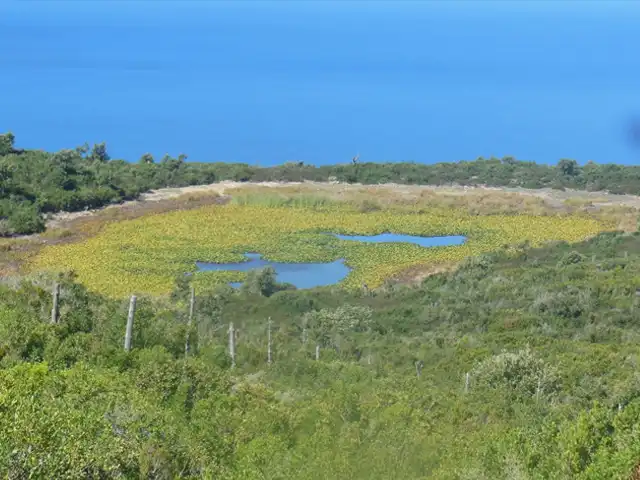
It extends over a total area of 10,122 hectares constituting a fenced integral protection zone, intended for the protection of the peat bog of Mejen Ech Chitan, the forest of Mhibès and the dam of Sidi El Barrak as well as the preservation endemic and rare plant and animal species, such as the white water lily among the flora and the Barbary deer among the fauna2.
The park is located in the lower humid bioclimatic stage with mild winters.
For several generations, a few families have practiced agriculture, animal husbandry and beekeeping in the Park. Aware of the great natural and cultural richness of the Park, these families have set themselves the objective of enhancing its potential by developing the production and marketing of organic fruit, vegetables and honey, as well as an agritourism and eco-tourism
Since 2005, they have been offering activities to help people discover the fauna and flora, the culture and traditional know-how, as well as the animal and plant production of the Park:
– Participation in agricultural activities (animal milking, honey extraction, harvesting of vegetables and wheat, extraction of essential oils, etc.);
– Hiking in the Park and environmental education;
– Sea trip with traditional fishermen;
– Tasting of organic products from the farm;
– Purchase of local products and visit to the weekly market
– etc…
Jebel Chitana National Park in Photos


Where to Find Jebel Chitana National Park
Discover in Video
Frequently Asked Questions
Jebel Chitana National Park is a protected area of 10,122 hectares in northern Tunisia, extending from Cap Serrat on the Mediterranean coast to the Sidi El Barrak dam inland. It protects cork oak forest, a rare northern Tunisian peat bog, and a population of Barbary deer.
The park contains a peat bog, an extremely rare habitat in North Africa, found at high elevation in the Kroumirie Mountains. Peat bogs require a cool, wet climate and are indicators of ecological conditions unusual in the Mediterranean-arid context of Tunisia.
The park protects Barbary deer in the cork oak forests, as well as wild boar, common genet, porcupine, and a rich variety of forest birds. The coastal section at Cap Serrat is important for seabirds and migratory raptors.
Yes. The Jebel Chitana area has developing agritourism with organic farms in the Kroumirie foothills offering farm stays and local produce. This community-based tourism complements the park's natural heritage with cultural and agricultural experiences.
The park is in the far northwest of Tunisia, roughly between Tabarka and Bizerte along the northern coast. Cap Serrat is reachable by hire car from Bizerte (about 80 km) or Tabarka (about 40 km). The Kroumirie interior roads are scenic but require care.
Yes. Jebel Chitana, Tabarka (with its Genoese Fort and coral diving), and Ichkeul National Park can be combined in a two-day northern Tunisia circuit, exploring the Kroumirie forest and wetland heritage together.
