

The Tophet of Carthage
The Punic sanctuary of Baal Hammon and Tanit, near the old ports
Discover the place
The Tophet of Carthage is one of the most moving and mysterious places of the ancient city. It lies in the Salammbô district, close to the Punic ports, near Tunis. Here, for centuries, the Carthaginians made offerings to their great gods, Baal Hammon and Tanit.
Tophet of Carthage: a sacred enclosure
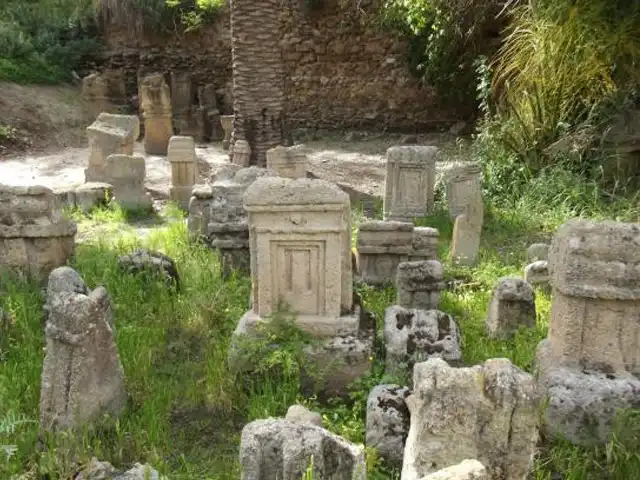
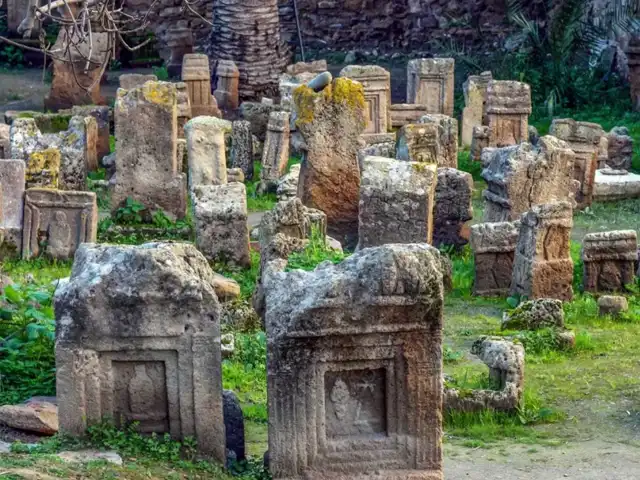
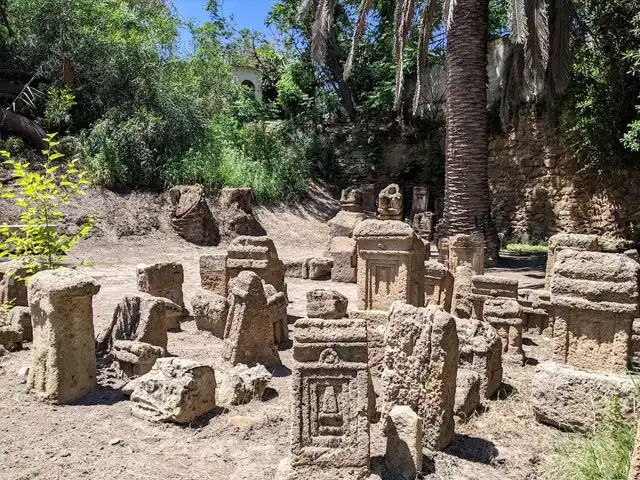
The sanctuary was used from the 8th century BC until the Roman destruction of the city in 146 BC. Over time, thousands of urns were buried here in successive layers. Above them, families set up stone steles, often carved with the sign of Tanit, a simple figure with raised arms. Today, many of these steles stand among the plants of a quiet garden.
A great historical debate
The deepest and oldest layers contain urns with the burnt bones of very young children. For a long time, historians saw this as proof of child sacrifice, as ancient Greek and Roman authors claimed. Nevertheless, some researchers now think that many of these children died of natural causes. In the upper layers, the urns mostly contain animal bones. The debate is still open, and that is part of the strong emotion of the place.
What you see at the Tophet of Carthage
The site includes a garden of steles, a vaulted passage where you can see urns and offerings still in the ground, and the remains of an altar. Above all, the silence and the shade of the trees make it a place to pause and reflect.
Visiting tips
Allow about thirty minutes. Then walk a few minutes to the Punic ports, the circular military harbour and the rectangular trading harbour. The Tophet is usually part of the combined pass of Carthage. For more history, see the Carthage page on Wikipedia.
In short, the Tophet is a small site with a huge story, at the heart of the Punic world.
Not to be missed
- The Punic sanctuary of Baal Hammon and Tanit Steles carved with the sign of Tanit Urns still visible in a vaulted passage A quiet garden near the Punic ports One of the great debates of ancient history
Practical information
- Period
- 8th to 2nd century BC
- Location
- Salammbô, near the Punic ports, Carthage
In pictures


On video
Where is it?
Frequently asked questions
A Punic sacred enclosure where offerings were made to Baal Hammon and Tanit.
From the 8th century BC until the Roman destruction of Carthage in 146 BC.
Ancient authors said so, and the oldest urns contain children's bones. However, some researchers think many died naturally. The debate is still open.
A simple symbol of a figure with raised arms, often carved on the steles.
A garden of steles, a vaulted passage with urns and the remains of an altar.
About thirty minutes.
The Punic ports, a few minutes away on foot.


Nine UNESCO World Heritage sites in Tunisia.
Discover Tunisia's heritage with an expert local guide
