
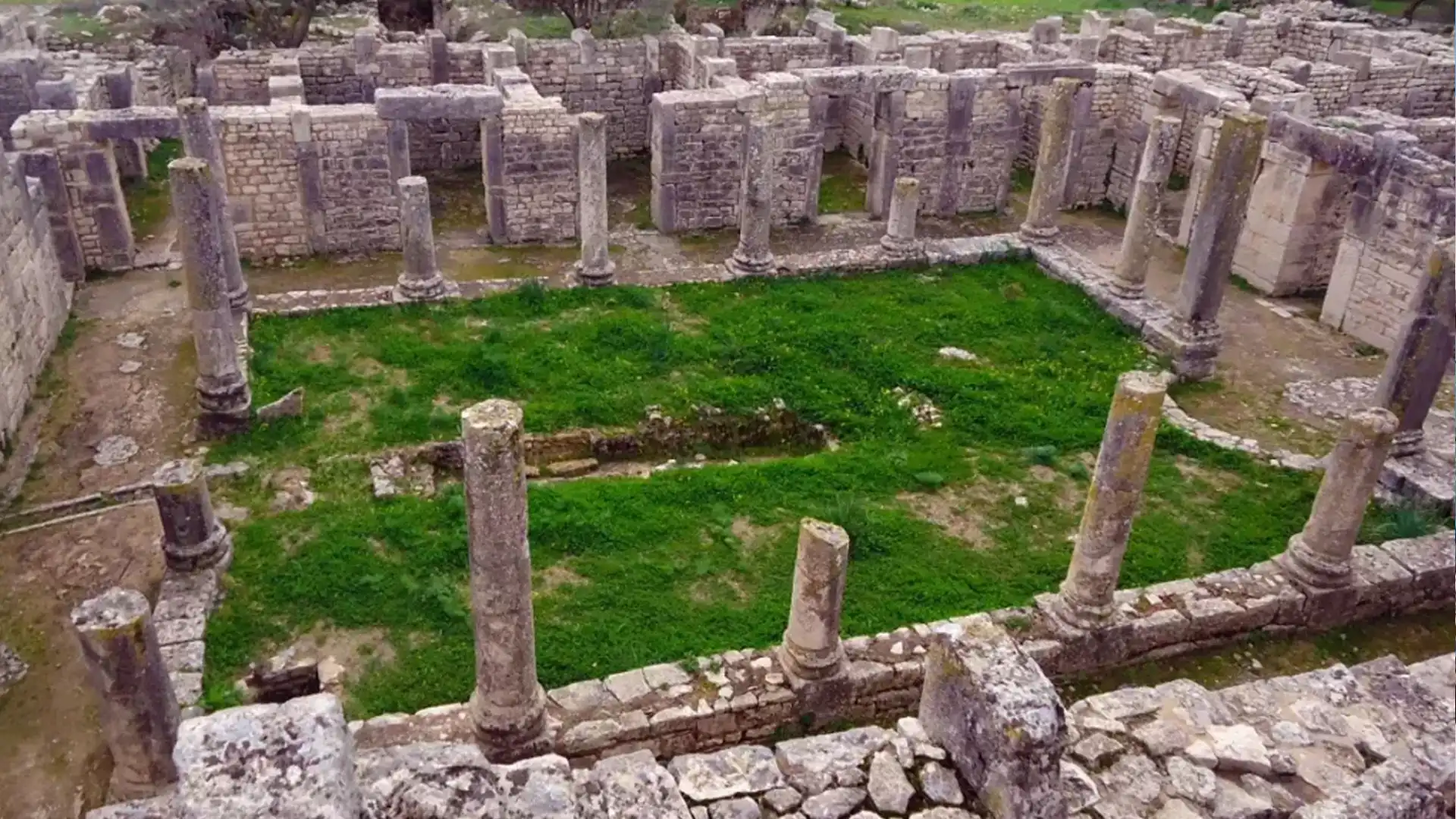
The Magon district
Punic houses and the sea wall of Carthage, by the shore
Discover the place
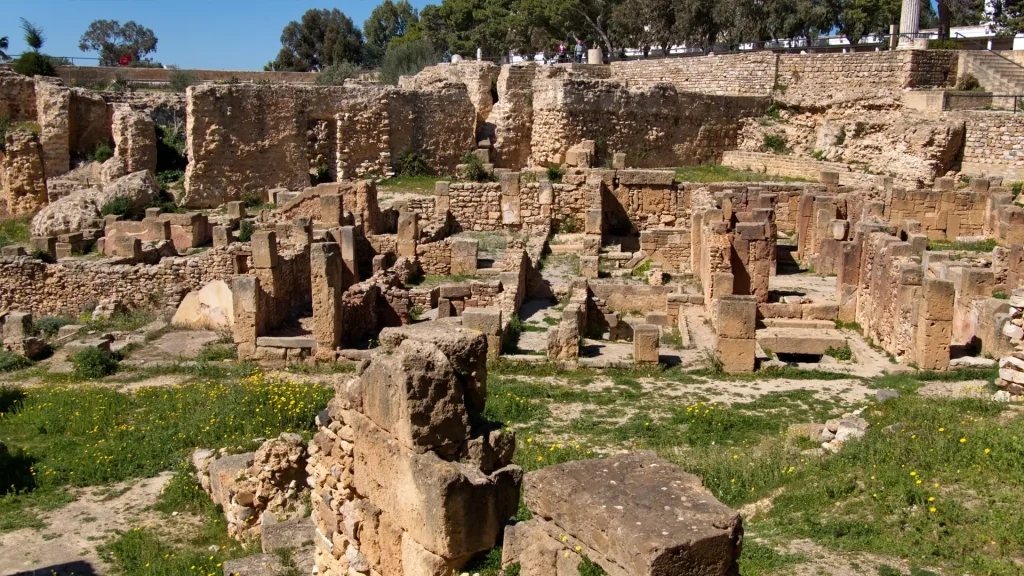
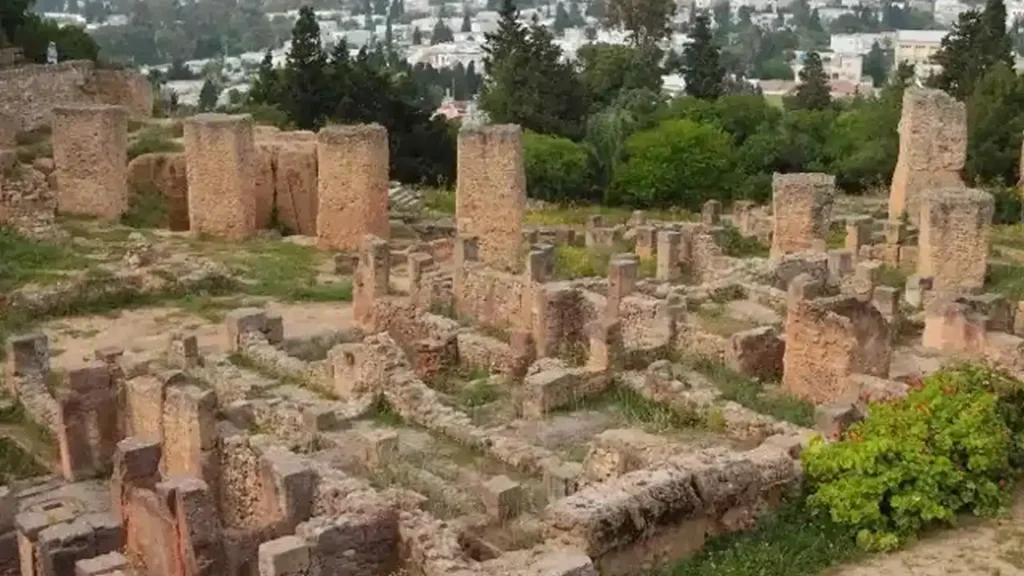
The Magon district is one of the most precious archaeological areas of Carthage. It lies by the Mediterranean, just south of the Antonine Baths, near Tunis. Because it was the last plot of land in Carthage to escape modern building, its Punic remains are exceptional.
The Magon district and the wall of Carthage
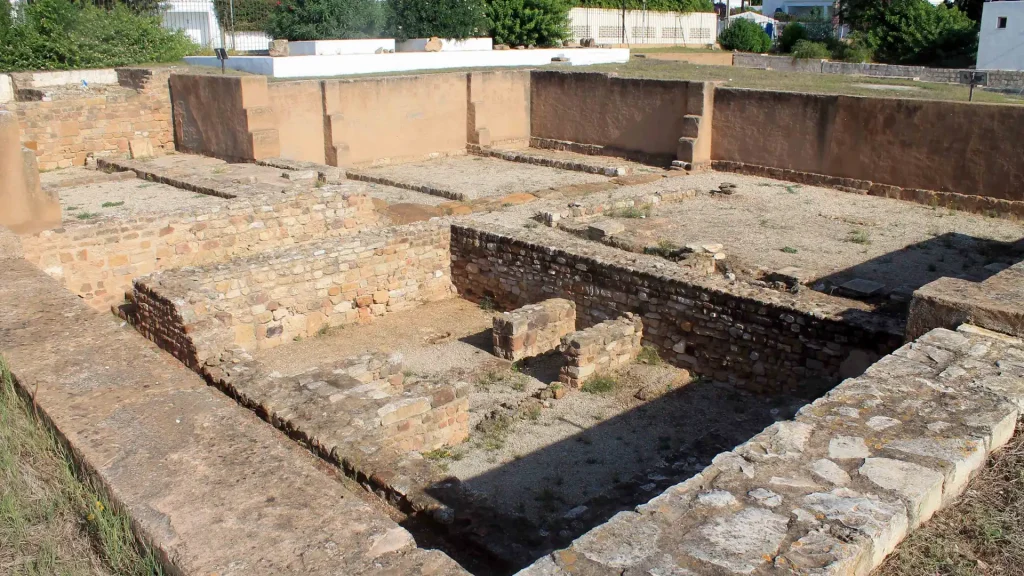
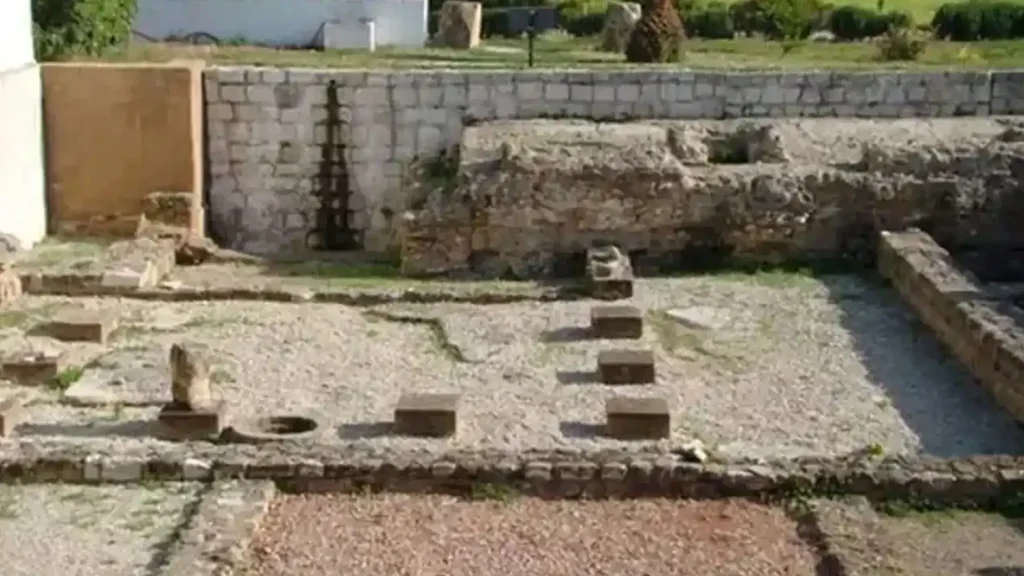
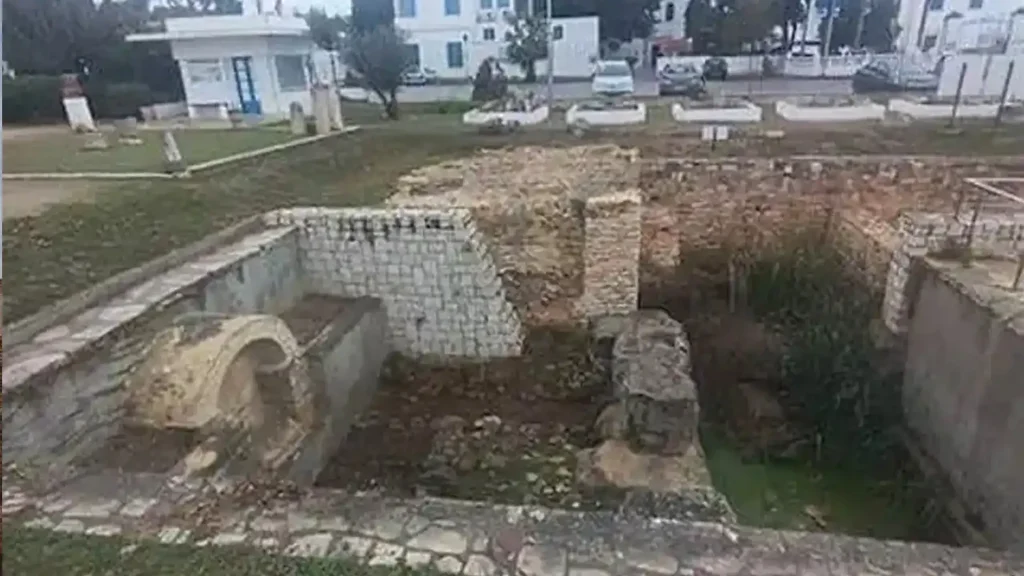
Here, archaeologists found the only visible section of the sea wall of Punic Carthage. It dates from the late 6th or early 5th century BC. Some of its foundation blocks weigh more than 13 tons. Next to the first bastion, you can also see traces of a small gate and rooms added in the 4th century BC.
Punic houses of the Magon district
The district was built in the 5th century BC, during the rule of the Magonid family, which gave it its name. At first the houses were small and simple. Then, in the 2nd century BC, large houses appeared, some of more than 1,000 square metres. Each one had several underground cisterns to store rainwater. In addition, painted stucco, columns and simple Punic mosaics decorated their rooms.
Daily life in Punic Carthage
Narrow corridors led from the street to courtyards surrounded by porticoes. Interestingly, the streets had no paving and no drains. A small museum on the site displays objects found in the houses of craftsmen. Thus, the Magon district gives a rare picture of daily life in Carthage just before the Roman destruction of 146 BC.
Visiting the Magon district
Allow about thirty minutes to an hour. The Antonine Baths are a short walk away, so visit both together. Then continue to the Roman villas, the theatre and Byrsa Hill. For more history, see the Carthage page on Wikipedia.
In short, this quiet seaside area is one of the best places to understand the Punic city before Rome.
Not to be missed
- The only visible section of the Punic sea wall
- Foundation blocks of more than 13 tons
- Rich Punic houses with cisterns and mosaics
- A small museum of objects from the houses
- A short walk from the Antonine Baths
Practical information
- Period
- 5th to 2nd century BC, Roman remains above
- Location
- Seafront, Carthage
In pictures
On video
Where is it?
Frequently asked questions
A seaside archaeological area of Carthage with Punic houses, part of the city wall and Roman remains.
It was built under the Magonid family, which ruled Carthage in the 5th century BC.
It is the only visible section of the Punic sea wall, with blocks of more than 13 tons.
In the 2nd century BC, some houses were larger than 1,000 square metres.
Yes, a small museum displays objects found in the houses of craftsmen.
About thirty minutes to an hour.
The Antonine Baths, the Roman villas, the theatre and Byrsa Hill.


Nine UNESCO World Heritage sites in Tunisia.
Discover Tunisia's heritage with an expert local guide
