
The Zitouna Mosque
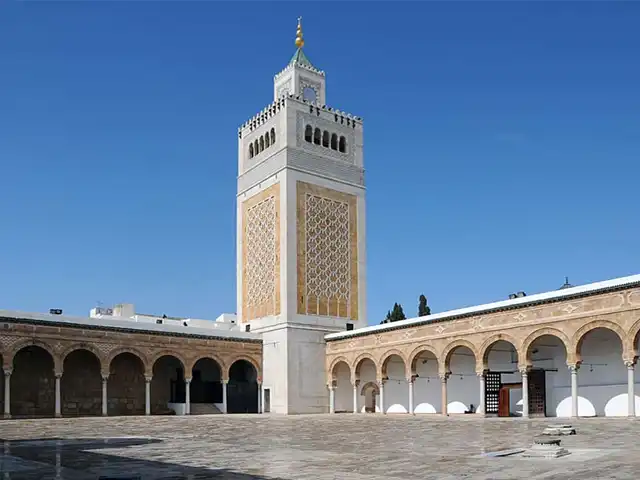
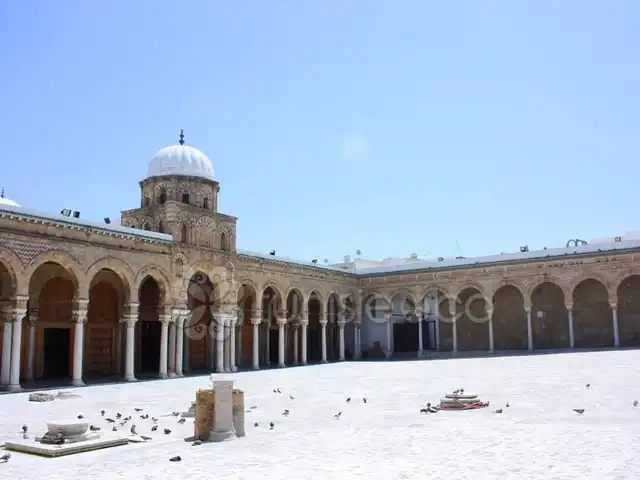
The Zitouna Mosque is the navel of the city of Tunis, the core around which the city as we know it today developed.
It is said that originally there was the retreat of a Christian monk and that near this retreat there was an olive tree, hence the name of the sanctuary: jemaâ Zitouna or Zitouna mosque (the Olivier) . The foundation of this one is very exactly dated: the year 732 of the Christian era; but the Zitouna was rebuilt in the middle of the 9th century.
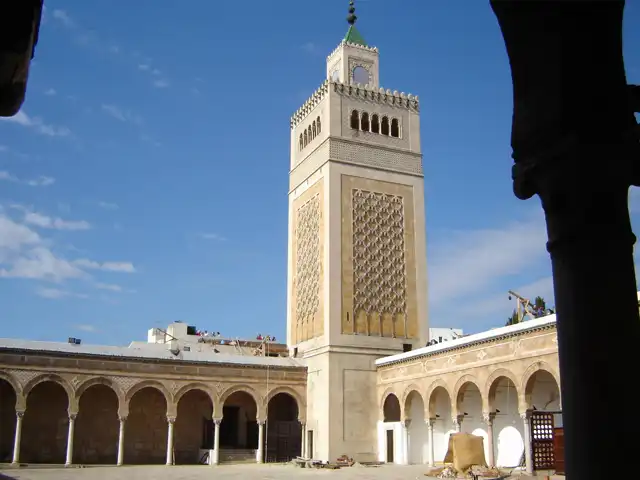
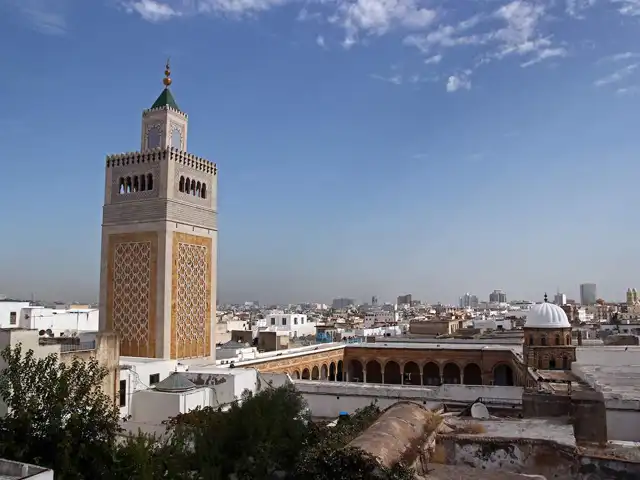
Since then, the mosque has undergone several refurbishments, each dynasty keen to improve the aesthetics or the functioning of what some consider to be the first Islamic university, and the latest intervention dates back to the 19th century with the remodeling of the minaret, high of 44 meters.
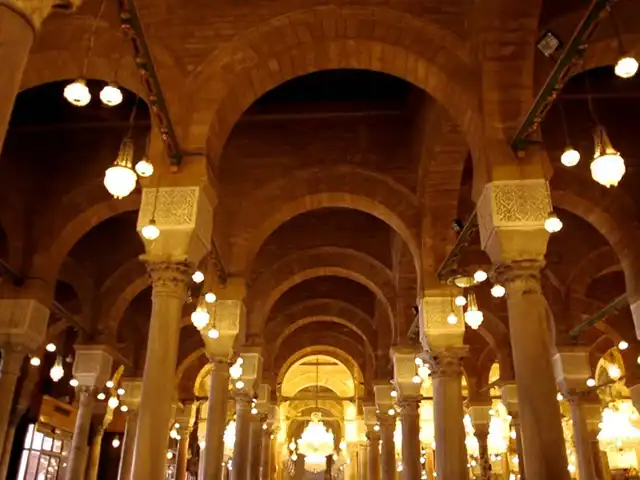
As a result, the mosque reflects in its own way the evolution of the art of building in this country since the High Middle Ages, and even higher if we consider the ancient reused materials integrated into the building, such as a few sculpted marble lintels or the forest of columns and capitals that support the ceiling of the prayer hall or the courtyards of exterior galleries, mostly from Roman and Byzantine times.
In addition to the prayer hall, the courtyard and the courtyards that surround it and give access to the monument – which constitutes the central body of the building – the mosque was equipped with annexes and outbuildings, such as the midha, to ablutions, or the library, founded in 1450.
Situation:
Tunisia
See also:
– The old Medina of Tunis
Amenities:
– Bathroom
– Shop
– Cafeteria
The Zitouna Mosque in Video
Where to Find The Zitouna Mosque
Frequently Asked Questions
Everything you need to know before visiting
The Zitouna Mosque was founded in 732 CE. Its name means "the Olive Tree" in Arabic, a reference to a legendary olive tree that once stood on the site.
The mosque housed one of the world's first universities, teaching Islamic law, theology, grammar, and rhetoric from at least the 9th century. Scholars such as Ibn Khaldun studied and taught there, and the Zitouna Library dates to 1450.
The prayer hall rests on 184 columns recycled from Roman and Byzantine monuments across Carthage and other ancient sites, creating a richly varied forest of marble and stone. The 44-metre minaret visible today was rebuilt in the 19th century in an Andalusian style.
Non-Muslim visitors may enter the outer courtyard and admire the arcades and minaret but are not permitted inside the prayer hall. The mosque is located at the heart of the Tunis medina, a UNESCO World Heritage Site.
The mosque stands at the centre of the Tunis medina, reachable on foot from Place de la Victoire through the main covered souks. The minaret is visible above the rooftops and serves as a natural landmark.
The outer courtyard is generally accessible to visitors outside prayer times. It is advisable to visit in the morning and to dress modestly; women should bring a headscarf. Hours can vary on Fridays and during Ramadan.
