
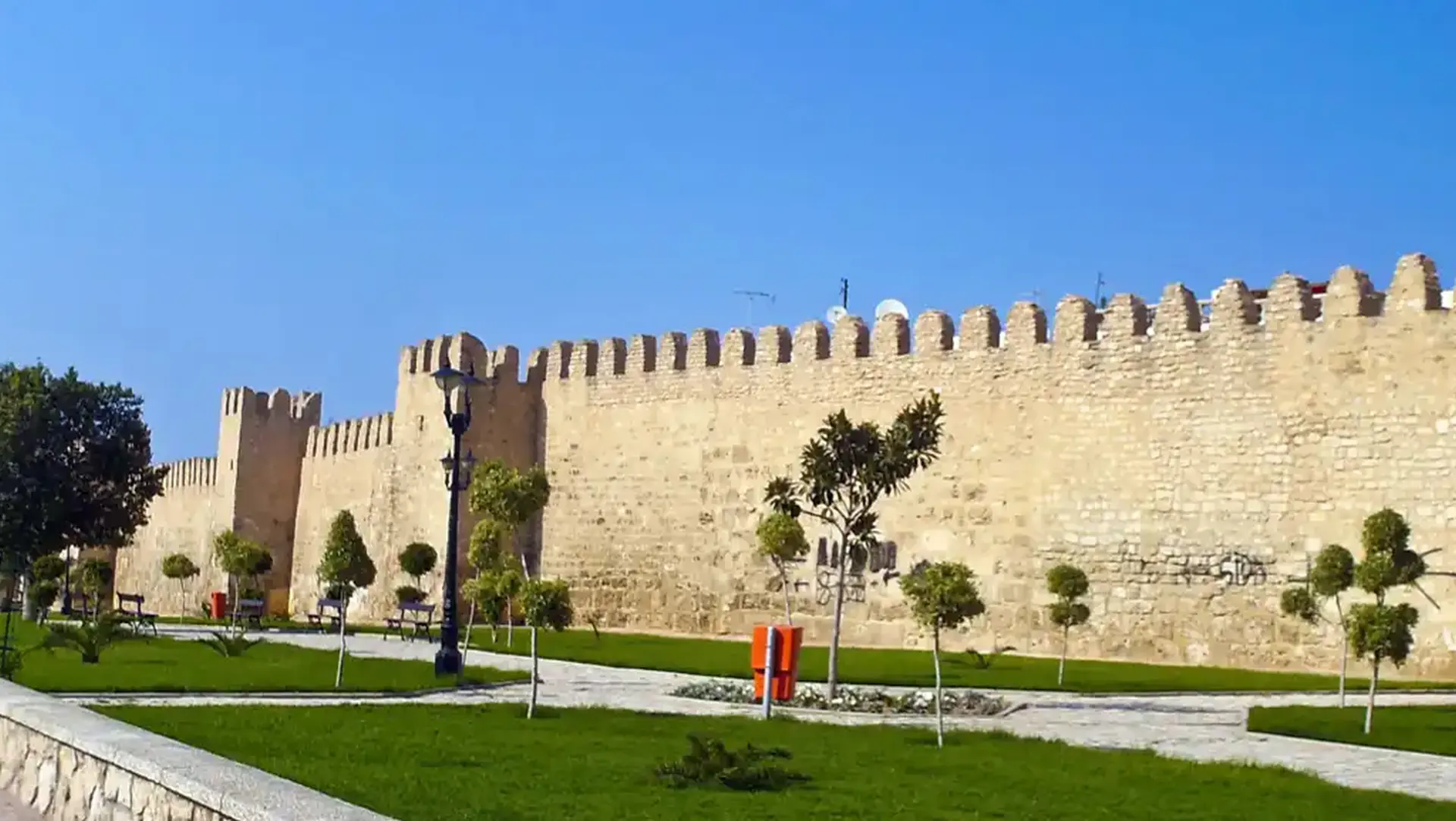
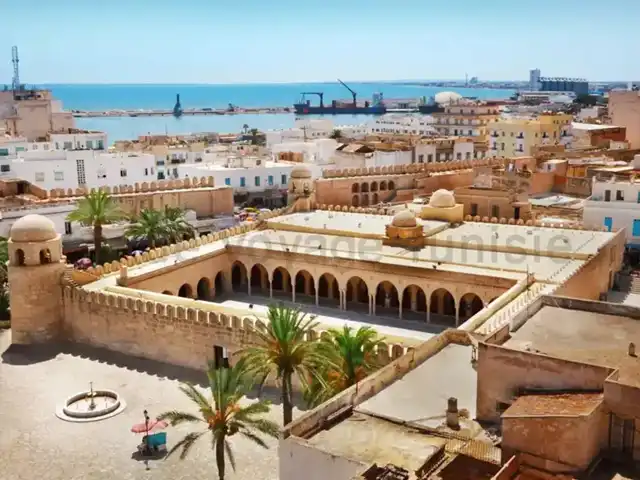
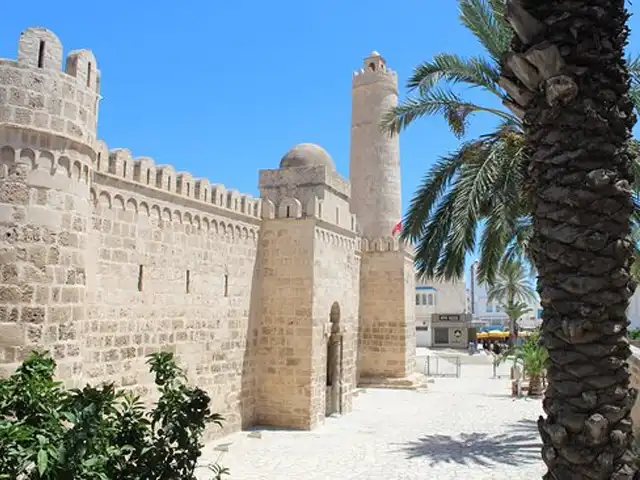


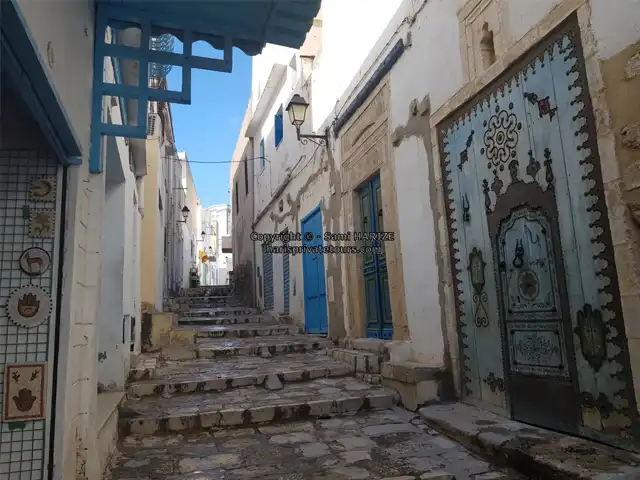
The medina of Sousse, nicknamed the Pearl of the Sahel, is one of Tunisia’s most vibrant cities. Its rich heritage, crafts, stunning beaches, and grand hotels captivate visitors with authenticity. At the heart of the city lies its medina, a UNESCO World Heritage site since 1988. Well-preserved ramparts surround the medina. It houses iconic monuments such as the Ribat, the Great Mosque, and the Kasbah. These are all fine examples of early Islamic military architecture.
Located in the Tunisian Sahel, the medina of Sousse perfectly illustrates Arabo-Muslim urbanism. This urban design adapted to a coastal city often threatened by piracy and sea invasions. Its defensive structure includes narrow alleys and traditional quarters. This layout provides a valuable example of this type of organization. Such structures are now endangered by modernity. The Ribat of Sousse is both a fortress and a place of worship. It is one of the oldest and best-preserved of its kind. The Ribat blends military and religious functions. Its tower served as both a minaret and a watchtower, ensuring the city’s protection.
The Medina of Sousse : History
Sousse’s history dates back to the Phoenicians, who settled there in the 11th century BC. The Romans later developed the city, making it a flourishing agricultural and port hub. In 670, the Arabs captured the city, renaming it Hadramout and later Sousse. Many of the monuments seen today, including the Ribat, the ramparts, and the Great Mosque, were built between the 7th and 9th centuries. Ultimately, the medina of Sousse offers an unforgettable journey. Visitors will discover Tunisia’s rich architectural and cultural heritage in this authentic setting.
The medina of Sousse in Video
The medina of Sousse on the Map
Map data © OpenStreetMap contributors
You came for the sun. You'll stay for the soul.
Let us show you what Tunisia truly is
