
About This Museum
Muzeum Tamazret znajduje się na najwyższym punkcie wioski Tamazret, kilka kilometrów od słynnego troglodyckiego miasta Matmata w południowej Tunezji.
To małe, ale urzekające muzeum oferuje wyjątkowy wgląd w dziedzictwo i tradycje amazigh (berberyjskie). Zostało założone w 1999 roku przez pana Mongiego Bourasa, lokalnego rzemieślnika i pasjonata strażnika swojej kultury, aby zachować i dzielić się bogatą tożsamością kulturową ludu amazigh.
Wewnątrz zwiedzający mogą odkryć imponującą kolekcję przedmiotów, tkanin i narzędzi odzwierciedlających codzienne życie w południowej Tunezji. Wśród najważniejszych eksponatów znajdują się ręcznie haftowane szale, tradycyjne amazighskie kapcie i kultowy bakhnoug – tkany wełniany okrycie noszone przez kobiety, z symbolicznymi motywami. Każdy egzemplarz jest wykonany z miłością przez samego pana Bourasa. Jego żona tworzy również wykwintne naszyjniki skhab z pachnących koralików, dostępne jako wyjątkowe pamiątki.
Muzeum Tamazret : podróż do kultury berberyjskiej
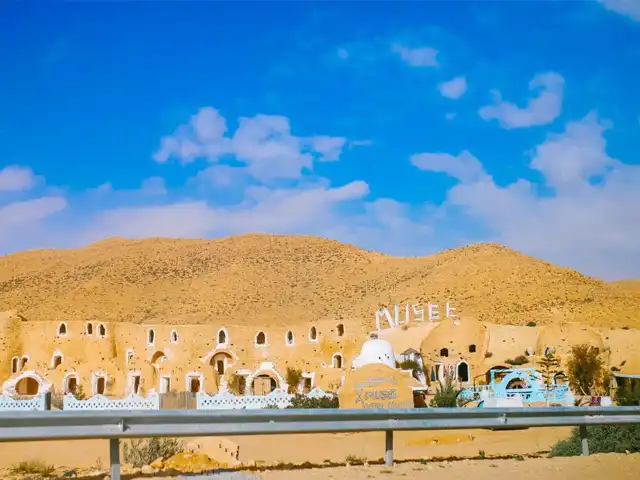
Muzeum mieści się w tradycyjnym półtroglodyckim domostwie, typowym dla prastarej architektury regionu. Oprowadzanie z panem Bourasem ożywia muzeum poprzez historie i kulturowe anegdoty. Po zwiedzaniu goście mogą skosztować domowego posiłku w table d’hôtes, z lokalnymi specjałami, takimi jak krabbiz, oliwki, daktyle i herbata miętowa.
Muzeum Tamazret to coś więcej niż muzeum – to żywe świadectwo dumnej i trwałej kultury.
Muzeum Tamazret in Photos




Gdzie je znaleźć na stronie Muzeum Tamazret
Discover in Video
Najczęściej zadawane pytania
The Museum of Tamazret is a small community museum founded in 1999 by Mongi Bouras, a local teacher, in the Berber village of Tamazret near Matmata. It is housed in a semi-troglodyte (partially underground) traditional dwelling and presents the material culture, textiles, and daily life of the Amazigh (Berber) people of the Matmata region.
The collection includes Amazigh weaving textiles, traditional slippers (babouches), bakhnoug wrap-garments, agricultural tools, household objects, and documentation of the oral traditions and customs of the Berber mountain villages. The museum building itself, a semi-troglodyte structure, is part of the experience.
A semi-troglodyte dwelling is partially carved into the rock and partially built above ground, combining the insulating properties of the rock with above-ground living spaces. The Matmata region is famous for its fully underground pit-houses (ghorfa), but semi-troglodyte forms are also traditional in the area.
Yes. The museum offers a table d'hôtes (shared-table meal) featuring local Amazigh food, providing visitors with an authentic taste of Berber mountain cuisine as part of the cultural experience. Pre-booking is recommended.
Tamazret is a mountain village about 45 km northwest of Gabes and 10 km from Matmata in the Matmata Hills of southern Tunisia. A hire car is the most practical way to reach the village. The drive through the dramatic troglodyte landscape is itself a highlight.
Yes. Tamazret, Matmata (with its famous underground houses and the hotel where Star Wars scenes were filmed), and the granary fortresses (ksour) of Ksar Hadada and Ksar Ouled Soltane can be combined into a memorable day in the Berber south of Tunisia.
